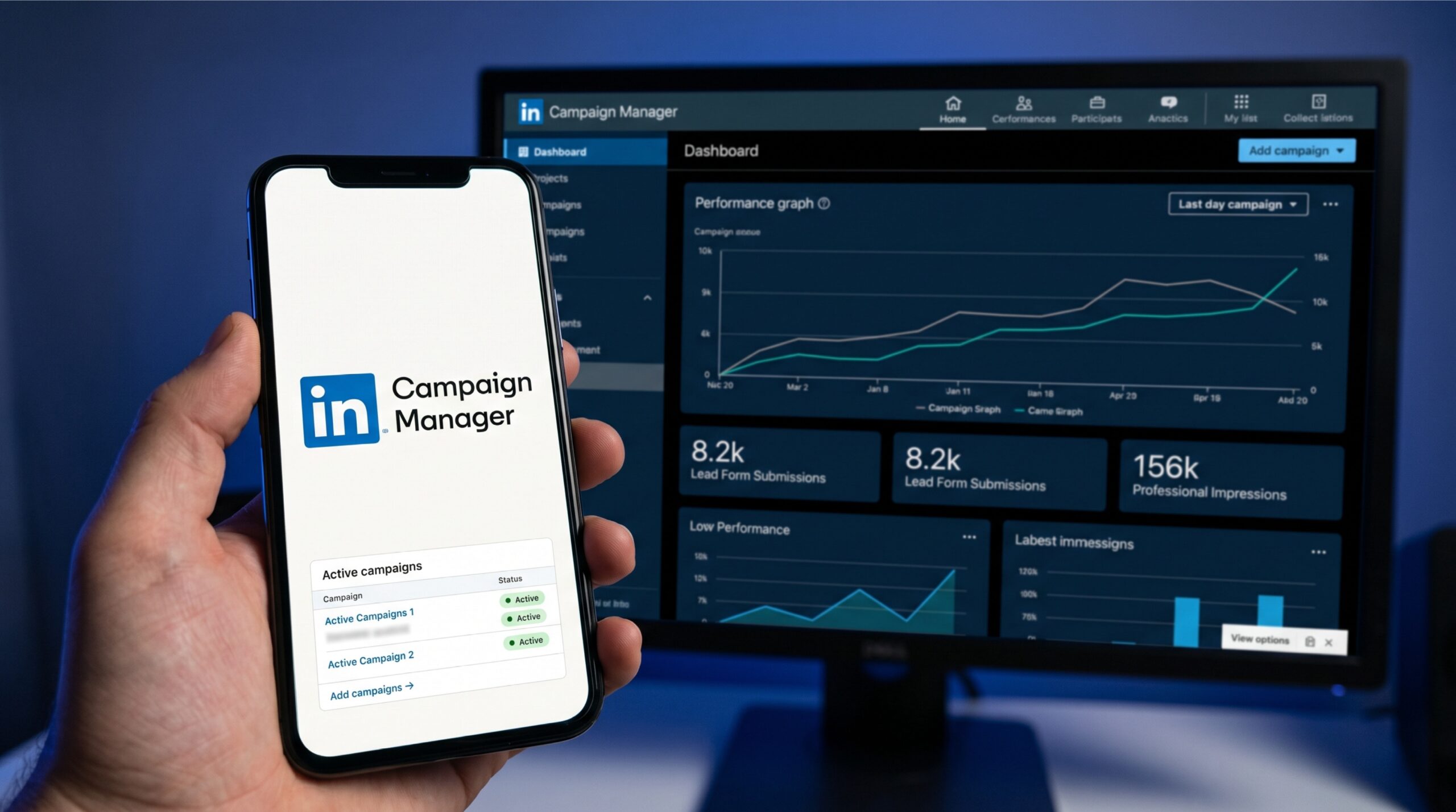
If you have ever tried running paid social campaigns for a B2B company, you have probably experienced the same frustration.
The clicks come in. Traffic increases. Engagement looks decent. But the pipeline does not move.
And if you have tried LinkedIn Ads specifically, there is a good chance you have wondered whether the platform is worth the investment at all.
That skepticism is understandable. Many B2B companies approach LinkedIn expecting it to operate like a traditional lead generation channel, launch campaigns asking people to book a demo or request a proposal, and walk away disappointed when the leads do not follow.
The problem is not always LinkedIn itself. It is often how the platform is being used.
This is where many B2B businesses discover a fundamental difference between consumer marketing and business marketing. The platforms that work well for e-commerce brands are not always the right fit for companies selling complex services, high-value solutions, or professional offerings with longer sales cycles.
That is why LinkedIn ads for B2B need to be viewed differently from many other paid channels. LinkedIn provides access to decision-makers, department leaders, and buying committees in a way that few other advertising platforms can match. But reaching those people is only the beginning.
LinkedIn tends to be strongest when it is treated as part of a broader awareness and demand generation strategy rather than expected to carry lead generation on its own. The platform becomes much more valuable when paid campaigns work alongside thought leadership, organic engagement, retargeting, search, content, and other paid media efforts that help turn awareness into demand over time.
The challenge is that LinkedIn advertising costs more than other paid social channels, and success requires a more thoughtful approach than most businesses expect going in.
Why LinkedIn Is Built Differently for B2B
Most social platforms are designed around personal interests, entertainment, and consumer behavior. LinkedIn is different because users show up with a professional mindset. They are networking, researching vendors, learning about industry trends, and engaging with business content. That context creates an environment that no other advertising platform can replicate for B2B.
Beyond the mindset, the targeting is what really sets LinkedIn apart. Advertisers can reach audiences based on job title, job function, seniority level, industry, company size, skills, and even specific company names. That level of precision is difficult to replicate on any other paid platform, and for B2B service businesses it often justifies the higher cost per click.
But access to the right audience does not automatically create demand. Someone can perfectly match your ideal customer profile and still have no reason to book a call with a company they have never heard of.
LinkedIn has the infrastructure to put your business in front of the right people. Your broader marketing strategy still has to give those people a reason to notice, trust, remember, and eventually choose you.
That does not mean you should pour money in and expect it to perform immediately. It means LinkedIn has the infrastructure to work when you set it up correctly.
The Biggest Mistake B2B Companies Make With LinkedIn Ads
Many businesses approach LinkedIn with the same mindset they use for Google Search. They launch a campaign and immediately ask prospects to book a demo or request a proposal.
In most cases, that is too much too soon.
B2B buying journeys involve multiple stakeholders, budget approvals, and extended research timelines. A prospect who sees your company for the first time on LinkedIn is rarely ready to speak with sales that same day.
There is also a structural difference worth understanding. LinkedIn is a low-intent channel compared to Google Search. People are not actively looking for solutions when they scroll their feed. They are reading content and catching up with their network, which means your ad is interrupting their routine rather than answering an active query.
That changes everything about how you build the campaign. On LinkedIn, the first touchpoint should be relevant and useful, not a hard pitch. The goal is to move the right person one step closer to a conversation, not force an immediate conversion.
LinkedIn does offer lead generation campaigns and native Lead Gen Forms, so it would be inaccurate to say the platform cannot generate leads. The problem comes when businesses expect cold LinkedIn ads to function as a complete lead generation strategy on their own.
For many B2B businesses, LinkedIn’s greatest strength comes earlier in the journey. It can help the right people become familiar with your company, understand your point of view, and remember your brand before they are actively looking for a solution.
Think of LinkedIn as a demand generation platform rather than a direct response channel, and your expectations will be much better calibrated.
LinkedIn Ads Work Better When People Know the People Behind the Brand
There is another piece of LinkedIn strategy that businesses often overlook: people tend to engage with people.
A company can run polished ads every week, but if there is no recognizable expertise behind the brand, those ads have to work much harder to establish credibility.
That is where thought leadership becomes important.
A founder, executive, subject matter expert, or another credible person within the business can use LinkedIn to share useful perspectives, respond to industry conversations, and engage with the people interacting with their content.
That does not mean the founder needs to personally spend hours managing LinkedIn every day. Marketing, sales, or social media teams can support content development and account management while the ideas and expertise still come from someone who understands the business and its customers.
Paid media can then amplify that visibility. Instead of asking a cold prospect to trust an unfamiliar logo because it appeared in their feed, the audience may begin seeing useful insights from someone associated with the business, encounter the company’s ads, visit the website, and engage with additional content over time.
That combination of human expertise, organic engagement, and paid reach is much closer to how trust develops in a B2B environment.
Start With Audience Strategy Before Campaign Strategy
One of the strongest advantages LinkedIn offers is its targeting precision. Unfortunately, many campaigns fail because audience development gets little attention before the ads go live.
Before building a single ad, define exactly who you want to reach. Consider who experiences the problem you solve, who influences the purchasing decision, who approves the budget, and which company sizes and industries are the best fit for your service.
From there, build tightly defined segments rather than broad ones. For most B2B marketing teams, job function combined with seniority is the strongest baseline targeting combination, giving the best balance of scale, precision, and efficiency. Add company size and industry filters to tighten relevance further, but be mindful of how narrow targeting affects your total audience size and delivery.
According to LinkedIn’s own campaign guidelines, the minimum recommended audience size is 50,000 members to drive meaningful results, and most practitioners suggest keeping targeting broad enough to stay well above that floor before layering in additional filters.
Once your core audience is producing consistent results, you can layer in matched audiences to retarget website visitors or upload a contact list directly from your CRM. That combination of cold targeting and warm retargeting is where a lot of B2B campaigns find their most efficient cost per lead.
Match Your Content to Where the Buyer Actually Is

The most effective LinkedIn campaigns recognize that not every prospect is ready for the same message. Someone who has never heard of your company needs something very different from someone already evaluating vendors.
At the top of the funnel, focus on education. Industry insights, benchmark studies, and problem-focused content perform well here because they provide value before asking for anything in return. The goal is to introduce your expertise and make the right people aware you exist.
This is also where founder and subject matter expert content can play an important role. A useful perspective coming from a recognizable person gives prospects another way to become familiar with the expertise behind the business before they encounter a direct sales message.
As prospects become more familiar with your company, you can offer more detailed resources such as case studies, comparison guides, and practical frameworks. This content builds credibility and starts demonstrating how you solve the problems they care about.
At the bottom of the funnel, once trust is established, stronger calls to action become appropriate. Consultations, assessments, audits, and discovery calls work well here because the prospect has enough context to evaluate whether a conversation makes sense.
The key is not forcing every LinkedIn interaction to generate a lead. It is giving the right buyer a logical next step based on how familiar they already are with your business.
The businesses that get this right usually see much lower cost per qualified lead because the offer at each stage matches where the buyer actually is, rather than where the advertiser wants them to be.
Choose the Right Ad Format for Each Stage
Not every format works equally well at every point in the funnel. Matching format to intent is one of the faster ways to improve campaign efficiency.
Sponsored Content is the workhorse of LinkedIn advertising. It fits naturally in the feed, works well for thought leadership and top-of-funnel awareness, and gives you reliable data on which messages resonate before you invest in other formats.
Thought Leader Ads allow businesses to sponsor posts from individual LinkedIn members rather than relying exclusively on content published from the company page. For businesses investing in founder or subject matter expert content, this creates an opportunity to combine a human voice with paid distribution.
Lead Gen Forms are native forms that open directly within LinkedIn without requiring a click to your website. They reduce friction by allowing prospects to submit information without leaving the platform. They can be useful when the audience and offer are right, but a completed form should still be evaluated based on lead quality and eventual pipeline contribution rather than volume alone.
Video Ads are strong for awareness and explaining a service outcome in a way that static images cannot. They drive reach more than clicks, so they work best as a top-of-funnel asset paired with retargeting rather than a standalone conversion play.
Message Ads land directly in a LinkedIn member’s inbox and can feel personal with the right copy. They tend to work better with warm or matched audiences than with cold contacts.
What Realistic Budget and Performance Looks Like
LinkedIn is not cheap to test, and pretending otherwise does not help anyone plan well.
Cost per lead on LinkedIn is genuinely higher than what you will see on Meta or Google Display, and the range varies widely depending on your industry, offer type, and audience seniority. That cost can cause sticker shock if you are used to high-volume, lower-cost lead sources.
The more useful way to think about it is not cost per lead in isolation, but cost per qualified opportunity. A lead that costs significantly more on LinkedIn may still outperform a cheaper lead from another platform if it closes at a higher rate, comes from a decision-maker with real budget authority, and requires less sales effort to move through the pipeline.
There is another complication: LinkedIn may contribute to an opportunity without receiving credit for the final conversion. A decision-maker might see a founder’s post, encounter a LinkedIn ad later, visit your website, leave, search for your company on Google several weeks later, and eventually convert through another channel.
If you judge LinkedIn only by the final form submission, much of that contribution can disappear from the performance picture.
The quality of the audience typically matters more than the volume of traffic, and that is where LinkedIn tends to justify its premium.
Because costs vary significantly by audience, objective, competition, and campaign structure, there is no single starting budget that makes sense for every B2B LinkedIn campaign. A test budget should instead be large enough to generate meaningful data for the specific audience and campaign being tested.
Common LinkedIn Advertising Mistakes to Avoid
Even well-funded campaigns can underperform when basic fundamentals are overlooked.
Expecting LinkedIn to work as a standalone lead engine can create unrealistic expectations from the beginning. LinkedIn can generate leads, but for many B2B businesses its greatest value comes when paid campaigns support a larger awareness, content, retargeting, and demand generation strategy.
Running ads without an organic presence makes it harder to build familiarity and trust. Founder, executive, or subject matter expert content gives prospects another way to understand who is behind the business and what they know.
Targeting audiences that are too broad often leads to wasted budget and weaker lead quality. Start narrow and expand strategically as performance data becomes available.
Sending traffic to a generic website page rarely provides the context needed to convert campaign traffic. Dedicated landing pages or Lead Gen Forms produce stronger results because the messaging aligns directly with the ad.
Focusing only on lead volume is a trap. A smaller number of highly qualified opportunities is almost always more valuable than a large list of unqualified contacts, especially in B2B where sales cycles are long and resources are limited.
Stopping campaigns too quickly is another common mistake. B2B buying cycles can take weeks or months, and campaigns often need sufficient time and data before meaningful conclusions can be drawn.
Ignoring sales feedback can quietly derail a campaign. If your sales team is consistently reporting poor lead quality, targeting and messaging likely need adjustment before you increase spend.
Connecting LinkedIn Results to Revenue

This is where many B2B LinkedIn campaigns fall apart, not in the targeting or the creative, but in the measurement after the lead comes in.
Form fills get tracked. What happens after the form fill often does not.
There is another side of that measurement problem too. What happens before the form fill often does not get enough attention. LinkedIn may introduce someone to your company without being the channel that receives credit for the eventual conversion.
If LinkedIn leads are not being tracked through your CRM against actual closed revenue, you are making budget decisions based on incomplete information. A lead that looks expensive upfront can look very reasonable once you see how it closes compared to leads from other channels.
Connecting LinkedIn ad data to your CRM and pipeline is what turns the platform from a question mark into a predictable growth channel. That alignment between your paid B2B social strategy, your CRM, and your revenue reporting is exactly what separates businesses that scale LinkedIn successfully from those that run it for 90 days and abandon it.
LinkedIn also works best as part of a larger system. SEO builds long-term organic visibility. Google Ads captures active search demand. Email nurtures prospects already in the pipeline. LinkedIn builds awareness and credibility with the right decision-makers before intent forms.
Founder and subject matter expert content can add another layer by putting a recognizable human voice behind that awareness. Retargeting can then keep the business visible as prospects move between LinkedIn, search, the website, email, and other channels.
When those channels work together, the impact is significantly greater than any single tactic running in isolation, and the attribution picture becomes much clearer.
LinkedIn does not have to carry the entire responsibility for generating leads. Its job can be to contribute to a system that creates awareness, builds trust, captures intent when it appears, and eventually turns that demand into a pipeline.
Your 30-Day LinkedIn Test Plan
A useful LinkedIn test should evaluate more than whether cold ads can generate leads in 30 days. It should help you understand whether LinkedIn can create meaningful engagement with the audience you actually want to reach and how that activity fits into the rest of your marketing.
Days 1 to 7: Build the foundation and launch. Define your audience using job function and seniority as the primary filters. Identify a founder, executive, or subject matter expert who can provide a credible human voice alongside the company’s paid activity. Review the content already being published from that person’s profile and identify useful perspectives that could support the campaign. Choose an ad format based on your goal. Create two to three ad variations with different headlines and offers. Install the LinkedIn Insight Tag on your website if it is not already there, because you will need it for retargeting later. Make sure your CRM and conversion tracking can also follow leads beyond the initial click.
Days 8 to 21: Build visibility and gather data. LinkedIn’s algorithm needs time to optimize delivery. Evaluate performance by engagement rate and cost per lead, not by impressions alone. Pause the lowest-performing variation and let the others run. At the same time, continue publishing and engaging organically rather than allowing the ads to operate in isolation. Pay attention to which topics and perspectives earn engagement from the right audience and what those people do after reaching your website.
Days 22 to 30: Connect the signals. Look at which audience segments are producing the best cost per qualified lead. Check whether form submissions are converting into real conversations. Then look beyond direct leads. Which companies and decision-makers are engaging? Are people moving from LinkedIn to the website? Are warm audiences responding differently from cold audiences? Is sales hearing from prospects who already recognize the company or its leadership?
Use what you learn to adjust targeting, offer, or format for the next cycle.
The goal of the first 30 days is not to prove that LinkedIn can independently generate enough leads to justify itself. It is to understand whether the platform can effectively reach your ideal buyers, which messages earn their attention, and how LinkedIn can support the larger system responsible for turning awareness into revenue.
Bringing It All Together
LinkedIn advertising works best when your expectations match how B2B buyers actually make decisions.
If the strategy is simply to target cold decision-makers, ask them to book a demo, and wait for leads, LinkedIn can become an expensive disappointment.
A stronger strategy recognizes LinkedIn for what it can contribute to the broader buying journey. It gives your business access to the right professional audience, provides a platform for thought leadership and human expertise, and creates opportunities to build familiarity before buyers actively enter the market.
Businesses that succeed with LinkedIn understand that demand generation is a process. They invest in audience research, educational content, and performance measurement that goes beyond surface-level metrics.
Combine that awareness with organic engagement, retargeting, Google Ads, SEO, email, strong website experiences, and accurate revenue tracking, and LinkedIn becomes part of a much more powerful B2B growth system.
The goal is not to make LinkedIn responsible for the entire pipeline. The goal is to understand the role it should play in creating it.
Ready to Build Your 30-Day LinkedIn Test Plan?
If your LinkedIn campaigns are generating activity but not contributing to the pipeline, the answer may not be another round of ads. It may be building a better system around them.
At Lazarus Design Team, we help businesses build demand generation systems that connect paid media, content, and conversion strategies into a measurable growth engine.
Talk to our team to build a 30-day LinkedIn test plan designed to test the audience, message, organic presence, and paid media strategy together, so you can understand where LinkedIn fits into your broader path to pipeline.